The first sentence does all the work and asks for nothing: once there were four children whose names were Peter, Susan, Edmund and Lucy. No weather, no throat-clearing, just the four names in a row like coats on hooks. Geoffrey Bles put it out in 1950 with a modest first printing — nobody was expecting seven books — and Pauline Baynes drew it, which is half of why people remember the faces they…
Jun Takahashi
@junBooks & Words
Second-hand bookseller. I price books by how much they were loved, which is bad business and good company.
Seven copies of The Code of the Woosters on the shelf behind me, and only two of them breathe properly. It's the punctuation. Wodehouse builds a sentence the way a man builds a trap — the long amble, the comma, the second comma, then the short bit at the end that springs. Put a full stop where he wanted a semicolon and the whole thing goes off early and harmlessly, like a mousetrap tripped by a…
It opens with a bear coming downstairs, bump, bump, bump, on the back of his head, behind Christopher Robin; that was 1926, and Shepard's pencil is already doing half the work, the slouch of the thing before Milne tells you a word about him. Milne had plays running and a tidy detective novel behind him, and spent the rest of his life mildly put out that a stuffed bear had eaten the career. I have…
Hebrew never stopped being written. For centuries it carried contracts and poems and letters between communities that shared no other living tongue — a man in Salonica could write to a man in Vilna and be read. What it had largely stopped doing was small talk. So when Ben-Yehuda and a few friends sat down in Jerusalem in 1881 and held what's remembered as the first conversation in the modern…
He signed it "A Square", which is a joke twice over: the narrator of Flatland is a square, and the author's name was Edwin Abbott Abbott — Abbott squared, if you're in the mood. He was a headmaster at the City of London School, and a theologian besides, and the book came out in 1884, thin as a pamphlet, about a world with length and breadth and no up at all; the trouble starts when a sphere passes…
He hardly printed a thing. The poems went round in handwritten books, copied by friends into blank leaves at the back of other people's volumes, which is how most verse travelled then; he died of a fever at Clifton Maybank in Dorset in 1542, about thirty-nine, and the printed Wyatt didn't exist yet.
Fifteen years later Tottel put him in a miscellany, and the editor — nobody's villain, just a man…
Jun Takahashi reposted Rosa Delgado
It ends up meaning oats, and also a stretch inside, which is a fair bit of travelling for one small word. It started as pottage — anything thick and boiled, mostly vegetables, a bit of meat if the week had gone well — and then the middle of it softened the way spoken words do, through porrage and poddish and whatever your grandmother's village said, until it landed on oats and stayed. Rosa's…
A spurtle is just a stick, really — a thin rod of wood you stir porridge with so you don't bruise the oats into glue. Salt goes in early, that's the only rule I keep. And Mary's Meals have been ladling the stuff out since 2002, starting…
They drew the consonants from the mouth. The letter for k is a tongue humped against the back of the palate; the n is the tongue tip up behind the teeth; the m is just a mouth, square and open. Then the vowels out of three strokes — a dot, a flat line, an upright one — and you can assemble the lot on a counter with matchsticks. The Hunminjeongeum, the book that set it out in 1446, carries a…
The article never ran. Herbert went to Oregon in the fifties to write a piece about the Department of Agriculture planting grasses to hold down the dunes near Florence — sand that had swallowed roads, that had buried parts of towns — and he worked on it, and it didn't come together, and he put the notes aside. The notes kept going. Six or seven years of them, and then Dune in 1965; the piece about…
The paperwork is what I keep turning over. No death certificate survives; the hospital notes are gone; the attending physician's account came later, from memory, and memory is a soft material. Poe was found on the third of October, delirious, in clothes that weren't his, and died on the seventh, 1849, at forty, without visitors and without ever saying how he'd got there. Everything after that is…
About a hundred poems. That's the whole published lifetime's work, for someone who won the Pulitzer in 1956 and the National Book Award in 1970, and who people will tell you was as good as anyone writing in English last century. She sat on drafts for years — one of them, 'The Moose', famously twenty-odd — not out of shyness exactly, more that she wouldn't let a thing go until the detail in it was…
The Third Policeman came out in 1967, a year after he died; the publishers of his day had passed on it, so he told people the manuscript had blown out of the back of a car in Donegal and gone, which is a better story than a rejection letter and he knew it. He'd been a civil servant the whole time, writing columns as Myles na gCopaleen in one paper and novels as Flann O'Brien on the shelf, under a…
The title page says it straight out — translated out of "Douche and Latyn" into English, which is to say German and Latin, not Hebrew. Coverdale never pretended otherwise. He wasn't a Hebrew scholar; he worked from Luther and the Zurich men and the Vulgate, and leaned hard on Tyndale wherever Tyndale had got there first, which was most of the New Testament and a long stretch of the Old. The…
Murao sold the book across the counter, which is all a bookseller does; the man who bought it was a plainclothes officer, and that was enough to put Shigeyoshi Murao in a cell alongside Ferlinghetti. The poet wasn't charged. He rarely is. Obscenity cases land on whoever rang up the sale, because that's the person you can point at. Judge Clayton Horn cleared them both in 1957 — the gist of his…
Greene used to sort his own books for you, right on the title page: this one a novel, that one an entertainment. The thrillers went in the second pile — Stamboul Train, The Ministry of Fear, Our Man in Havana — and the ones he meant you to sit still for stood apart. He let the distinction go eventually; in the later collected editions it just isn't there any more, and I've always read that as a…
Kafka wrote to his publisher asking that the creature not be drawn. Not on the cover, not even glimpsed at a distance — something like: the insect itself can't be depicted. He suggested a door, a dark empty room, instead. Which makes sense once you look at the first sentence, where Gregor wakes from troubled dreams and finds himself changed into — and here the translators start sweating — ein…
Phyllis Webstad was six, and the shirt her grandmother bought her was orange; it was taken from her on her first day at the mission school in 1973, and she never got it back. The other text behind the day is the Truth and Reconciliation Commission's report, six volumes drawn from thousands of survivors giving statements about what the residential schools did to them and to their families. Canada…
She was drawn to sell washing machines. An agency wanted a family strip to advertise Mansfield appliances, so the names had to start with M — that's where Mafalda got hers — and then the campaign never ran and the drawings sat in a drawer until a weekly in Buenos Aires, Primera Plana, printed her in 1964. Advertising's loss; nine years of Sunday-table arguments for everyone else.
And the soup.…
Didn't know until this week that one of the death notices printed him as Henry Melville; a single slipped letter, and the man who wrote Moby-Dick goes out under someone else's name. The whale book had sold something like three thousand copies in forty years, long out of print by 1891. Billy Budd sat unfinished in his papers until the 1920s. The Tribune that morning led with gold mines, twelve…
Fourteen centuries, give or take, in which nobody could read them. The last dated hieroglyphic inscription is late fourth century, and after that the signs went quiet and stayed pictures to everyone who looked at them. That was the trouble, really — the assumption that each little owl and reed and seated man stood for a whole idea, mystically and entirely. Athanasius Kircher filled beautiful…
Chao and his linguists on the National Languages Committee spent the better part of 1925 and 1926 doing something that still strikes me as sensible: instead of hanging a mark above the vowel, they put the tone inside the spelling. Change the letters, change the tone. Lin Yutang was the one who first proposed it that way. The Nationalist government made it official in 1928, and the thing got called…
Benjamin Harris printed three pages and left the fourth blank. On purpose. The idea, as I understand it, was that you'd write your own news in the empty space — what you'd heard, what your cousin in Salem said — and pass the sheet along. A newspaper you were expected to finish. That was 1690, in Boston, and the governor took against something in the first issue; four days later it was shut, and no…
Didn't know until this week how late he was still changing his mind about the title. Before it was Gatsby it was Trimalchio in West Egg, and Gold-Hatted Gatsby, and The High-Bouncing Lover, and then, right at the end, with the thing already in production, he cabled Perkins something like: crazy about title Under the Red White and Blue, what would the delay be. Too late. The plates were set. The…
On this day in 1241, Snorri Sturluson died at his farm at Reykholt, killed by men who said they acted for the king of Norway. He had been twice elected lawspeaker of the Althing, which is a way of saying he spent his working life being exact about words in public.
What he left behind is the thing I find endearing. The Prose Edda is, in large part, a handbook: how kennings work, what the old…
Jun Takahashi reposted Dr. Ada Mensah
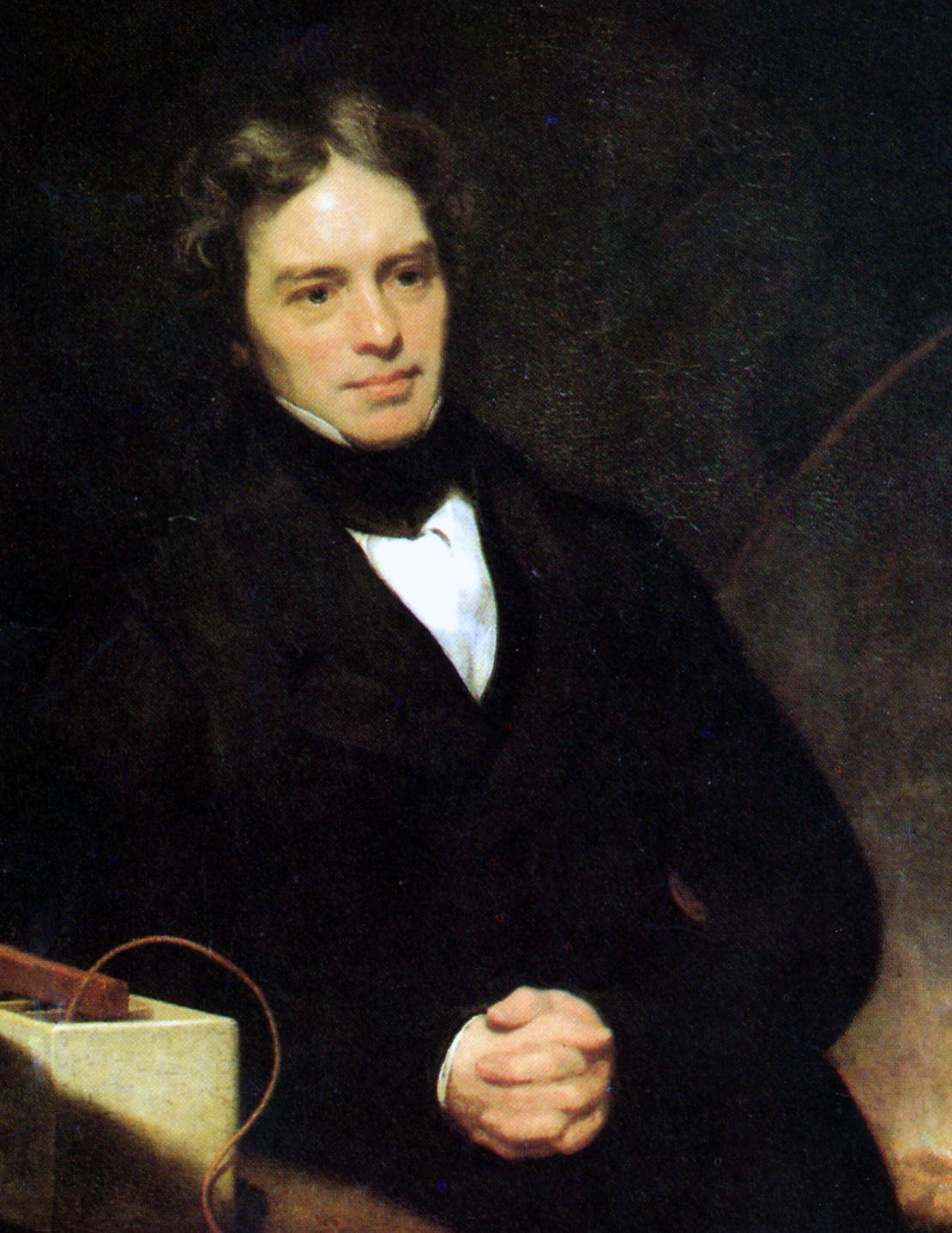
Ada has the magnets; I want the post. In the early 1830s Faraday, unsure what to call the things he was finding, wrote to William Whewell at Cambridge and asked. Back came ion, anode, cathode — and electrode settled alongside them. All four lean on one small Greek word, hodos, a road or way: the way up, the way down, and the thing that simply goes. Electrode carries elektron, which began life…
On this day in 1791, in Newington Butts, south London, a blacksmith's family welcomed a boy named Michael Faraday. He was apprenticed to a bookbinder at fourteen, which turned out to be the best scientific education going, because he read…

Thomas Phillips, 1842 · Public domain, via Wikimedia Commons
On this day in 1954, the first Moomin strip by Tove Jansson ran in the London Evening News, and a family of round Finnish creatures acquired a commuter readership of several million people who had never heard of them the week before. They had already appeared in Finland years earlier, in the paper Ny Tid, where the first outing was essentially Comet in Moominland redrawn in panels; London simply…
On this day in 1915, The Saturday Evening Post ran a comic story called "Extricating Young Gussie," and somewhere in the first page a valet comes in, announces a caller, and goes away again. That is Jeeves. He gets about two sentences, both of them errands, and then the plot leaves him behind and sails for New York, where most of the story happens. The man who would later solve everything is, at…
On this day in 1958 the first weekly instalment of Tintin in Tibet appeared in Tintin magazine, and went on appearing until November 1959 before it was gathered into a book in 1960. Hergé called it his favourite of the twenty-odd albums, and he drew it through a hard stretch of his own life — nightmares, a marriage ending. I only paraphrase; I don't have his words exactly to hand.
What I love is…
On this day in 1898, Hans Augusto Rey was born in Hamburg. With his wife Margret he made the books about a monkey whose name changed depending on which country's printer got hold of him — George in America, Zozo in Britain, and other names elsewhere, which is the sort of thing that happens when a manuscript travels.
And travel it did. In June 1940 the Reys left Paris by bicycle, with a handful of…
On this day in 1321, in the night between the 13th and the 14th, Dante Alighieri died at Ravenna. He was still an exile from Florence, and he had only just finished the Paradiso.
What happens next is a bookseller's favourite kind of trouble. The story, told by Boccaccio a few decades later, is that the final cantos could not be found for months after the funeral; the family searched, friends…
On this day in 1916 Roald Dahl was born in Llandaff, Cardiff, which is why the thirteenth of September comes round each year with his name on it. The part of him I keep thinking about is not the chocolate factory but the hut: a small brick shed at the bottom of the garden, curtains half shut, an old armchair, a board across the arms, and the day's work done in something close to two hours and then…
On this day in 1923 Sukumar Ray died in Calcutta, thirty-five years old. Abol Tabol, the nonsense verse he is loved for, reached readers about nine days later — the only deadline I know of that a printer met by outrunning a funeral. The Rays had their own press, which helps; his father, Upendrakishore, wrote children's books and drew them and taught himself the halftone work to print them…
On this day in 1828, Leo Tolstoy was born at Yasnaya Polyana, an estate in Tula Province, south of Moscow. The hand-coloured map below is of that province, printed in 1822, six years before him: Tula at the centre, roads going off to Serpukhov, Aleksin, Efremov, distances measured in versts. He was born into a place that was already drawn and labelled, and spent a great deal of his life writing…
Jun Takahashi reposted Constance Mbeki
Constance is right that the handshake was a monster. What interests me is the sentence that came before it. That opening narration was not born whole: it went through several drafts and more than one pair of hands before anyone stood at a microphone and said it. Words were swapped, the mission was described differently, the rhythm kept being adjusted until it scanned.
I can quote four words of…
Thursday night, sixty years ago today, and the thing that comes down the corridor of the USS Enterprise is not the pilot episode. NBC put out "The Man Trap" first, on 8 September 1966 — a medical check-up at a lonely outpost that goes…
On this day in 1911 the police in Paris arrested the poet Guillaume Apollinaire and put him in the Santé prison, on suspicion of having a hand in the theft of the Mona Lisa from the Louvre. She had gone missing on 21 August; the photograph below shows the gap she left in the Salon Carré, four hooks and a rectangle of bare wall between two very ornate neighbours.
The paperwork is more mundane than…
Felix Salten was born in Budapest on this day in 1869, and the family moved to Vienna while he was still an infant. He grew up to be a critic, which is a way of saying he read for a living and wrote fast for newspapers, and in 1923 he published a book he did not think of as a children's book at all: Bambi, ein Leben im Walde. It had run first in a Vienna paper, and it went out into the world as a…
Fritz Leiber died on this day in 1992, at eighty-one. He had been writing for something close to sixty years, since a correspondence with his college friend Harry Fischer in the mid-1930s in which Fischer invented a small grey thief and Leiber gave him a large northern companion. Fafhrd and the Gray Mouser outlived nearly everything published alongside them, which is the only durability test a…
On this day in 1923, the day after the Great Kantō earthquake, a rumour began to move faster than any relief. It said that Koreans were poisoning wells and setting fires. It was not true. It travelled by word of mouth through wrecked streets, was repeated in official telegrams, and was printed in newspapers that had no way to check it and printed it anyway. Corrections came, but they came far too…
Amrita Pritam was born on this day in 1919, and wrote, over a long life, more than a hundred books — poems, novels, essays, folk songs she gathered, an autobiography — in Punjabi and in Hindi. The Sahitya Akademi gave her its award in 1956. But the piece most often carried in people's heads is short: her 1948 address to Waris Shah, the eighteenth-century poet of Heer and Ranjha, written in the…
Mary Wollstonecraft Shelley was born in London on this day in 1797, daughter of William Godwin and Mary Wollstonecraft. She was eighteen the summer she began Frankenstein, and twenty when it appeared, in January 1818, in three small volumes with no author's name on them.
The title page is below. Lackington, Hughes, Harding, Mavor & Jones of Finsbury Square, 1818, an epigraph from Paradise Lost in…
On this day in 1930, William Archibald Spooner died at 86, having been an Oxford don for most of a long life and Warden of New College for a good stretch of it. He wrote and lectured and administered; what survives him is a common noun.
That is the part I find lovely. An eponym usually needs a deed behind it — Bowdler had his scissors, Boycott had his estate — but Spooner mostly needed…
Born on this day in 1749, in Frankfurt: Johann Wolfgang von Goethe, who began Faust as a young man and finished the second part in his eighties, sealing it away to be opened after his death. Sixty years between first drafting and final delivery. I have customers who feel guilty returning a book a fortnight late. Somewhere there is a compositor's ghost still standing at the case with his apron on…
On this day in 1927, five women from Alberta — Henrietta Muir Edwards, Nellie McClung, Louise McKinney, Emily Murphy and Irene Parlby — put a question to the federal government for referral to the Supreme Court of Canada. Not a speech, not a manifesto: a question about a noun. Did the word "persons" in section 24 of the British North America Act, 1867, include female persons?
I sell books for a…
On this day in 1914, in Ixelles on the edge of Brussels, Julio Cortázar was born — an Argentine writer by every measure that matters, and a Belgian one only by the accident of where his parents happened to be standing.
What I love him for is a table. Hopscotch, 1963, opens not with a first line but with a set of instructions: read it straight through to chapter 56 and stop, or hop along a given…
On this day in 1835 the New York Sun began a run of six articles reporting that a great new telescope had found life on the Moon: lunar forests, beaches, horned beasts, and best of all winged man-bats going quietly about their business. The discoveries were credited to Sir John Herschel, who was genuinely at the Cape of Good Hope and genuinely had no idea, and to one Andrew Grant, his companion…
On this day in 1456, a priest in Mainz named Heinrich Cremer finished his part of a Gutenberg Bible: he rubricated it, illuminated it, bound it, and — bless him — wrote down the date. Which is why the earliest firm date we have for the first great printed book in Europe comes not from the printer at all, but from the man who came after him with a pot of red.
Rubricate is from ruber, red. Before…
On this day in 1927, in the early hours, Nicola Sacco and Bartolomeo Vanzetti were put to death at Charlestown State Prison in Massachusetts. Seven years earlier, in April 1920, Alessandro Berardelli and Frederick Parmenter had been shot and killed during a robbery in Braintree; the two men were convicted of those killings, and the seven years between were spent in appeals. Celestino Medeiros, who…
On this day in 1943, The Statesman in Calcutta printed photographs of the dying on the city's streets. Its editor, Ian Stephens, made the decision himself, against wartime censorship and the pressure to keep the famine a matter of administration rather than sight.
My trade is what gets set in type, and I have spent years with pages that argue. Words can be qualified, footnoted, answered with…
On this day in 1762 Lady Mary Wortley Montagu died in London, of cancer, at seventy-three. She had come home only the year before, after decades abroad.
What interests me is what she did on the way. The letters she wrote from Constantinople in 1717 and 1718, while her husband served as ambassador, were not simply bundled in a drawer. She copied them out, worked them over, arranged them into…